Corporate Office Refresh: Foam Board Signage and Pull-Up Banners for Reception and Meeting Areas
Table of Contents
- Why Office Refresh Signage Starts at Reception
- Foam Board Signage for Reception and Meeting Rooms
- Choosing the Right Size
- Where Foam Board Should Not Go
- Pull-Up Banners for Reception, Events and Open Days
- Design Tips That Make Banners Work
- Posters, Business Cards and a Five-Step Plan
- Posters and Business Cards to Finish the Look
- Plan Your Office Refresh Signage in Five Steps
- Make Your Office Refresh Signage Count
- Frequently Asked Questions
- Is foam board suitable for office signage?
- What is the difference between a pull-up banner and a roller banner?
- Can I get signage printed on the same day?
- Which size foam board is best for a reception wall?
Most offices start a refresh with paint and furniture, then realise the walls still say nothing about the business. Good office refresh signage fixes that. It tells visitors where to go, what you do and who you are, and it can be printed quickly. ExactPrint lists a same-day option at checkout on its foam board and roller banner pages, so a late change of plan does not have to derail the project.
This guide covers how to use foam board signage and pull-up banners in London reception areas and meeting rooms, plus two small extras that tie the look together.
Why Office Refresh Signage Starts at Reception
Reception is the first room a visitor sees, and it is often the one with the least thought put into it. A tired logo on a plain wall, a handwritten sign pointing to the lifts and a pile of old leaflets all send a quiet message about the business.
A refresh does not need a rebrand. Most London offices only need three things:
- A clear welcome board with the company name or logo
- Directional signs for meeting rooms, kitchens and quiet areas
- A flexible display that can change with each campaign or event
Foam board covers the first two. Pull-up banners cover the third. Planning them together keeps colours, fonts and tone consistent.
Before you order anything, walk through reception as a visitor would and note what each wall is missing. A short list of three or four signs, each with one clear job, is easier to design, easier to proofread and far less likely to leave the reception area looking crowded or mismatched.
Foam Board Signage for Reception and Meeting Rooms
Foam board is an expanded PVC foam sheet, light enough to carry and rigid enough to stand or hang flat. The product page describes it as waterproof and suitable for indoor and outdoor showcases, though most reception and meeting room signs never leave the building.
Typical uses for foam board signage in an office include:
- Welcome boards with the company name, tagline or logo
- Meeting room names and floor directories
- Values or mission statements displayed in a lobby
- Mounted team photos or project showcases
Choosing the Right Size
Size depends on where the sign hangs and how far away people read it.
- A0 (841 x 1189mm): A statement piece for a large reception wall or a showcase panel. Take a look at the A0 foam board for lobbies with plenty of wall space.
- A1 (594 x 841mm): A flexible size for meeting room walls, corridors and welcome boards. The A1 foam board is a sensible first choice if you are not sure.
A quick test helps. Stand where a visitor would stand and ask whether the main message can be read in three seconds. If not, go up a size or cut the wording.
Where Foam Board Should Not Go
Foam board is a display material, not a safety product. It is not fire-proof or fire-rated, so do not treat it as a safety sign, and check with your landlord or building manager before fixing anything to walls or placing it near exits. Keep it out of direct sunlight, which can spoil the print over time.
Pull-Up Banners for Reception, Events and Open Days
A pull-up banner, also called a roller banner, rolls out in moments and packs away again. That makes it ideal for an office that hosts clients, workshops or recruitment days without a permanent events space.
Many people search for "roller banner" and "pull up roller banner" as well as "pull-up banners", so you may see all three names on supplier sites. They describe the same product.
Good uses for pull-up banners in a London office:
- A branded backdrop for a reception desk during a busy launch week
- A welcome point at a client breakfast or training session
- A service message that changes each quarter, without repainting a wall
- A presence at an industry event, then back to the office afterwards
The pull-up roller banner in 800 x 2000mm is a common size for lobbies and meeting areas. The product page lists a same-day option at checkout, which helps when a client visit is booked at short notice.
One point on placement. Pull-up banners are an indoor choice for most offices, so keep them inside. If you need something for outdoor use, ExactPrint offers PVC banners as a separate product.
Design Tips That Make Banners Work
- Keep one message per banner. A headline, a short line and a contact detail is enough.
- Put key text between knee and eye height so it stays readable when people stand in front.
- Use high-resolution artwork. Low-quality logos look worse at this size.
- Leave space at the bottom. The base of the banner sits near the floor and is easy to scuff.
Posters, Business Cards and a Five-Step Plan
Posters and Business Cards to Finish the Look
Two smaller products pull a refresh together without much effort.
An A1 poster works well in corridors, break rooms and stairwells. Use it for team achievements, campaign images or office etiquette reminders. Choose silk or gloss depending on the lighting.
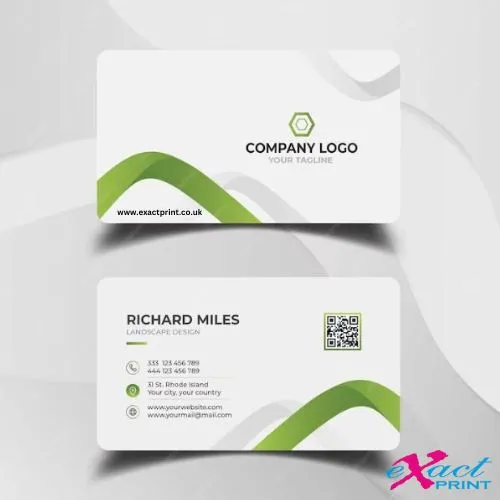
Reception is also where visitors expect to pick something up. A neat stack of business cards on the desk gives them a way to follow up. The product page mentions a priority or same day collection or delivery option at checkout, which suits teams who forget cards until the day before a meeting.
Plan Your Office Refresh Signage in Five Steps
A short plan prevents rushed orders and mismatched designs.
- Walk the space. List every wall, door and desk that needs a message, and note the viewing distance for each.
- Pick a visual style. Settle logo placement, colours and fonts once, then reuse them on every sign.
- Match the product to the job. Foam board for fixed signs, pull-up banners for flexible displays, posters for secondary spaces.
- Prepare the artwork. Send finished, high-resolution files and double check spelling and phone numbers.
- Order with a buffer. Choose the same-day option if you need it, but do not leave the order until the morning of the event.
Remember that ExactPrint prints the artwork you supply, so proofreading stays with your team.
Make Your Office Refresh Signage Count
A refresh works best when every sign has a job. Foam board handles the permanent messages, pull-up banners cover the changing ones, and a few posters and business cards fill the gaps. Start with the reception wall, then build outwards. ExactPrint prints the artwork you supply, so settle logo placement, colours and wording once and reuse them across every sign. If your London office is hosting visitors soon, check the delivery options on each product page before you set a date.
Ready to start? Order an A1 foam board for your welcome wall and use the same-day option at checkout if your timeline is tight.
Frequently Asked Questions
Is foam board suitable for office signage?
Yes. It is light, easy to hang or stand and prints sharply. It is not fire-proof, so keep it away from exits and check wall fixing rules with your landlord or building manager.
What is the difference between a pull-up banner and a roller banner?
Nothing. They are two names for the same product: a printed banner that rolls out of a base and stands upright. Search results use both terms, so it helps to know they mean the same thing.
Can I get signage printed on the same day?
The foam board, pull-up roller banner and business card pages each list a same-day option at checkout. Check the option on the product page when you order, because availability can change.
Which size foam board is best for a reception wall?
A0 suits a large wall and a bold statement. A1 works for most welcome boards and meeting room displays. Measure the wall and the viewing distance before choosing.