Client Report Printing for Manchester Professional Services Firms: Binding Options
Table of Contents
Spinningfields is where a lot of Manchester's serious business gets done. Manchester City Council's city centre health check describes it as the commercial office heart of the city, home to law firms and financial institutions.
In that world, a report isn't just a report. It sits on a client's desk with your name on the front. It gets passed round a boardroom. Sometimes it decides whether you win the work.
So when it comes to client report printing, the small choices matter. Paper, layout and, most of all, binding. This guide is for the marketing and admin teams who get handed the job, usually with a deadline attached.
What a client report needs
Before you pick a binding, think about how the report will be used.
- Read once, or kept for months? A short update gets read and filed. An annual review might live on a shelf for a year.
- How many pages? This is the big one. It shapes almost every other choice.
- Handed over in person, or posted? A report handed across a table needs to look sharp from the first second.
- Who's reading it? A board, a client's finance team, the public? Each one expects something a little different.
The basics every report needs
- A clean cover with your logo and a clear title.
- Page numbers. People will say "see page 12" in the meeting.
- A contents page, if it runs to more than a handful of pages.
- Plenty of white space. Dense pages feel heavy to read.
- Your contact details at the back, so the next step is easy.
Screen colours versus printed colours
Your brand colours can look a little different on paper than on a bright laptop screen. If colour really matters, check your file is set up properly before you upload it, and use the same colour values you use across your other printed materials.
Print and PDF together
Most clients want both. Send the PDF before the meeting so they can read ahead, then hand over the printed copy on the day. It feels thorough, and it gives them something to make notes on.
Stapled versus perfect bound
These are the two report binding options we offer, and they suit different jobs.
Stapled: neat, quick and great for shorter reports
An A4 stapled brochure is held together with staples along the fold, like a magazine.
- Best for shorter documents, such as quarterly updates, case studies or market briefings.
- Opens flat easily, which is handy when people are writing notes on it.
- One thing to know: stapled books are made from folded sheets, so the page count has to be a multiple of four. Plan your layout with that in mind, or you'll end up with blank pages at the back.
A stapled brochure for reports is a smart, simple choice when the content is short and to the point.
Perfect bound: a square spine that feels like a book
An A4 perfect bound brochure has its pages glued into a square spine, like a paperback.
- Best for longer documents, such as annual reviews, big proposals and research reports.
- The flat spine can carry your title, so it's easy to find on a shelf.
- It feels weighty and finished. It says "we took this seriously".
- It doesn't open as flat as a stapled book, so keep important text away from the inner margin.
How we'd choose
- A short report for a quick read? Stapled.
- A long report that needs to look premium and last on a shelf? Perfect bound.
- Not sure? Check the page options on each product page, then decide.
Presentation boards for pitches
Sometimes the report is only half the story. If you're pitching in person, a big visual on a board helps the room focus.
- An A1 foam board (594 x 841 mm) is rigid, light and easy to carry into a meeting room.
- Use it for one strong chart, a project timeline or a key number you want people to remember.
- Keep it to one idea per board. If it needs a paragraph, it belongs in the report.
For a reception area or a seminar room, an A2 poster (420 x 594 mm) works well for event information or a short summary of your services.
Business cards for the meeting
It sounds obvious. But we've seen plenty of people run out of cards in the middle of a pitch.
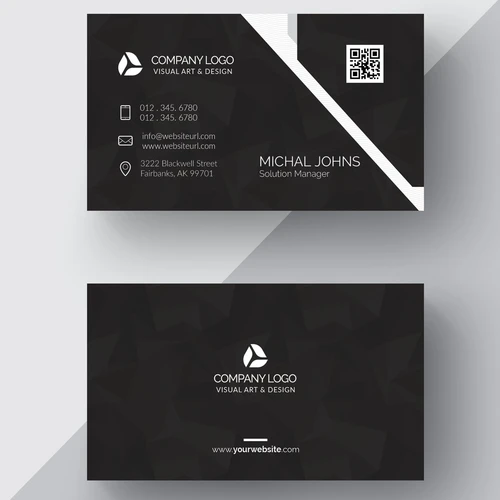
- Take more business cards than you think you need.
- Make sure the details match the report. Same name, same title, same phone number.
- Tuck a card inside the front cover of each report. If the report gets passed on, your details go with it.
A small touch that helps
If several colleagues are in the meeting, make sure everyone has cards in the same design. It looks joined up, and it is.
Order timeline
Here's how timing works for professional services print sent to Manchester.
- Standard UK shipping is 2 to 3 working days of production, then about 2 days for delivery.
- Working days are Monday to Friday.
- Same-day delivery is only for London and inside the M25, so plan for standard shipping.
| When | What to do |
|---|---|
| 3 weeks before | Agree the content and page count. Choose your binding. |
| 2 weeks before | Final proofread. Get sign-off from whoever needs to approve it. |
| 8 to 10 working days before | Place your order. This gives time for production, delivery and a few days spare. |
| The week of the meeting | Check every copy. Add business cards inside the covers. |
Proofread like it matters, because it does
- Read the final file, not an old draft.
- Check every number against the source.
- Check names and job titles, especially the client's.
- Ask someone who hasn't seen it to read the first and last pages. That's where mistakes hide.
Treat these dates as a guide, not a promise. A day or two of slack is always worth having.
Make your next report count
Good client report printing tells your client you care about the detail. And in professional services, detail is the whole job.
Choose your binding, upload your file and we'll print and send your reports to your Manchester office. Want help choosing? Call us on 020 7701 2515. You can also read more about our document printing in Manchester City Centre.